The work · two

Stone

الحجر

Limestone the colour of the plaster figures pulled out of Ain Ghazal, and basalt — the black volcanic stone of the Jordanian north, quarried whole and left rough.

Thirty minutes from his studio, men digging a road found faces.

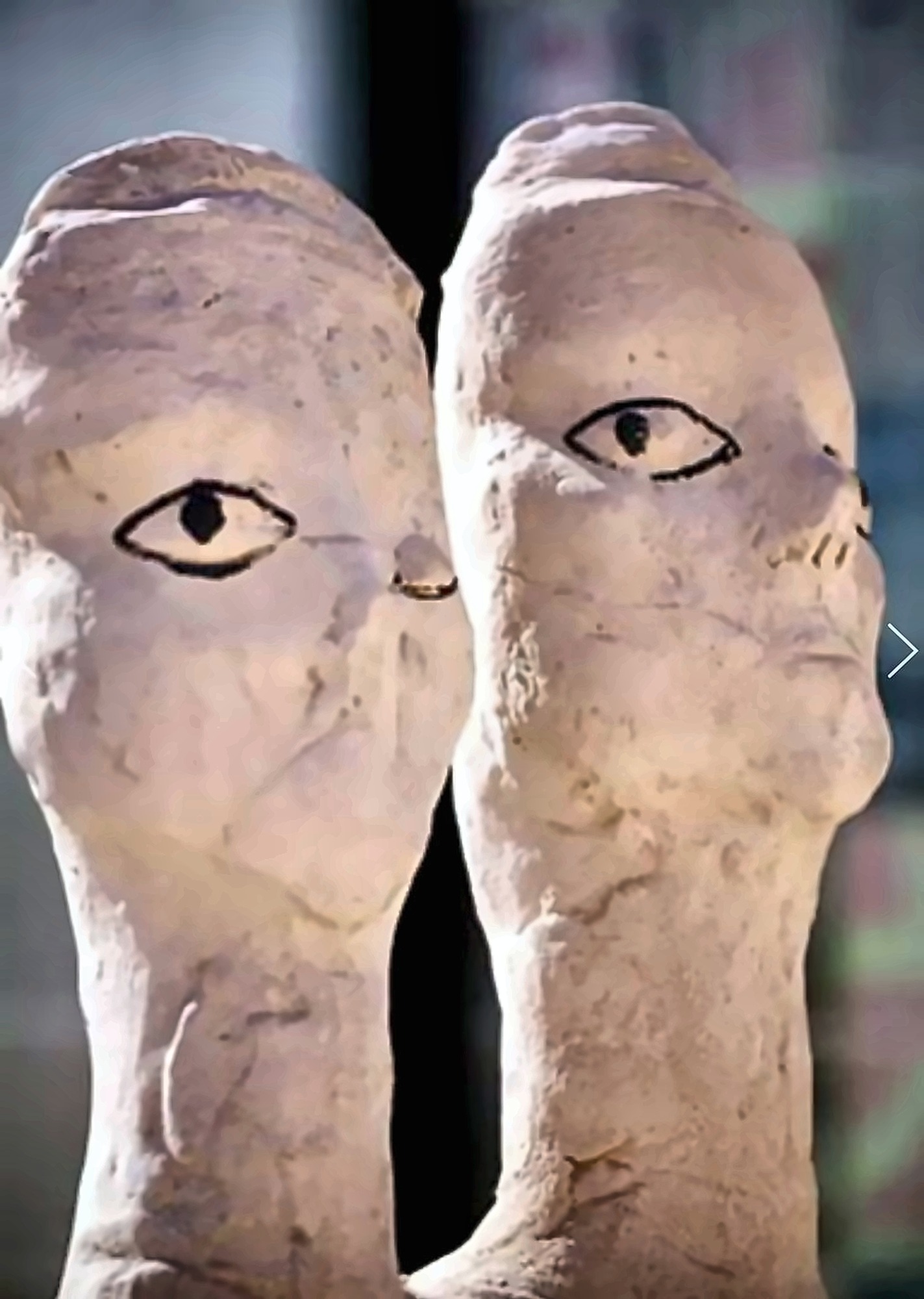
Lime plaster over bundled reed. Eyes ringed in bitumen so the figures look back. Ten thousand years old, and still coming out of the ground the year he finished his degree. He has spent four decades answering them.
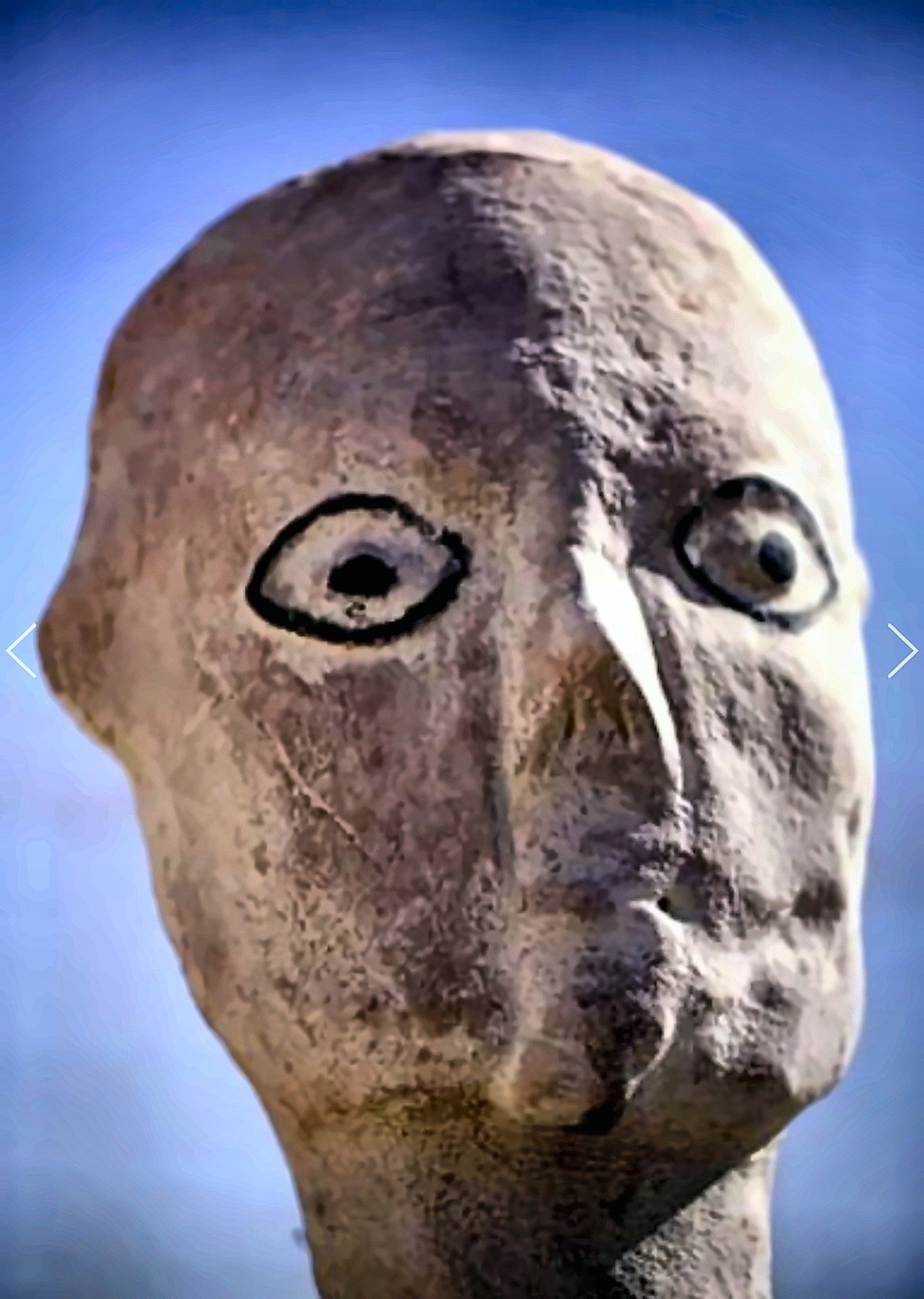
A limestone head with large drawn eyes.
Limestone figure with drawn eyes.
Two limestone figures side by side with painted eyes.
Two figures. Limestone with pigment.
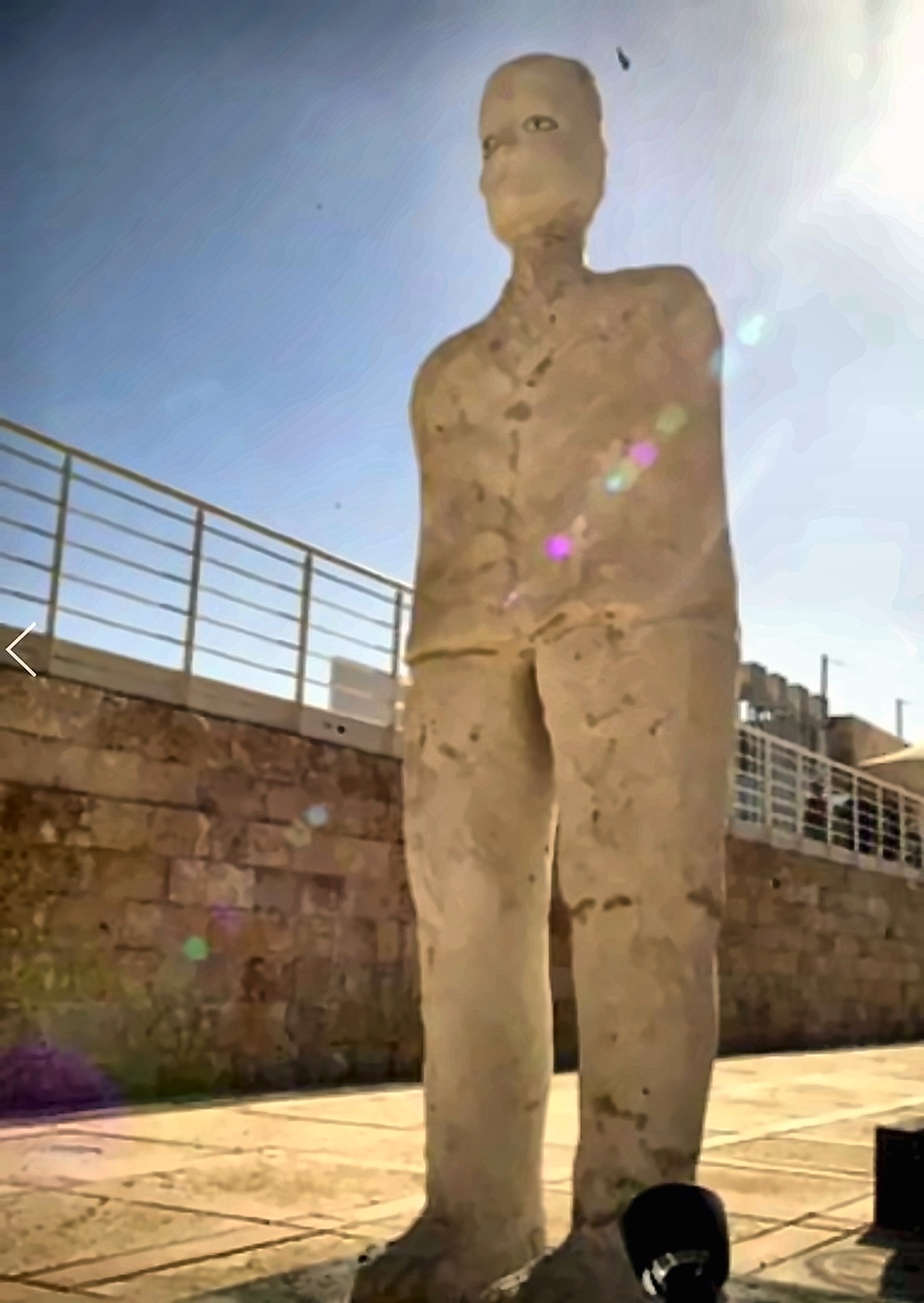
A standing limestone figure about two metres tall, outdoors.
Standing figure. Al-Hussein Gardens, Amman.
Basalt and bronze

He does not carve the boulder. He answers it.

The stone arrives as it came out of the ground. What he adds is cast — a cage, a pair of horns, a cube, a bird — bolted to a surface he has left alone.

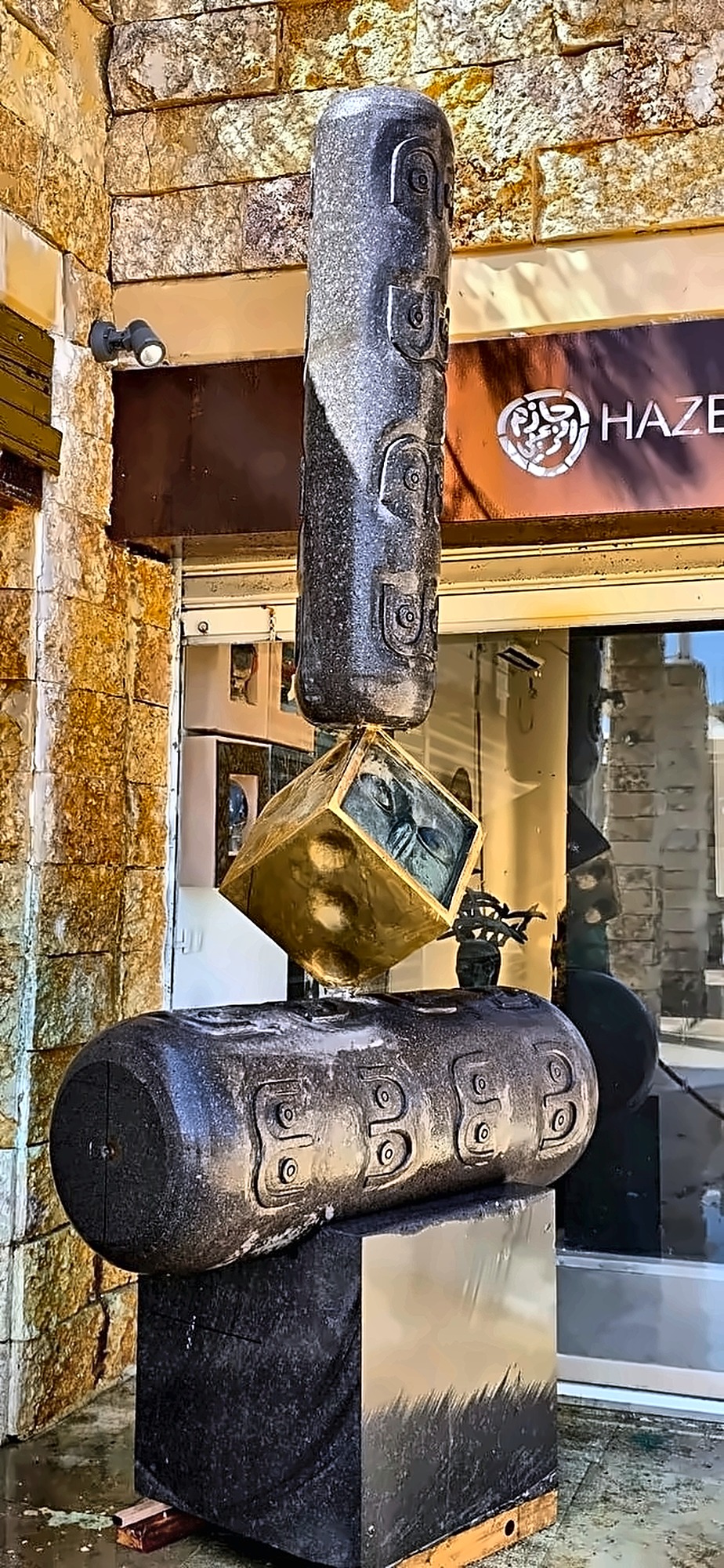
The basalt and bronze work standing outside the gallery door in daylight.
Basalt and bronze. His most recent work. Amman, August 2026.
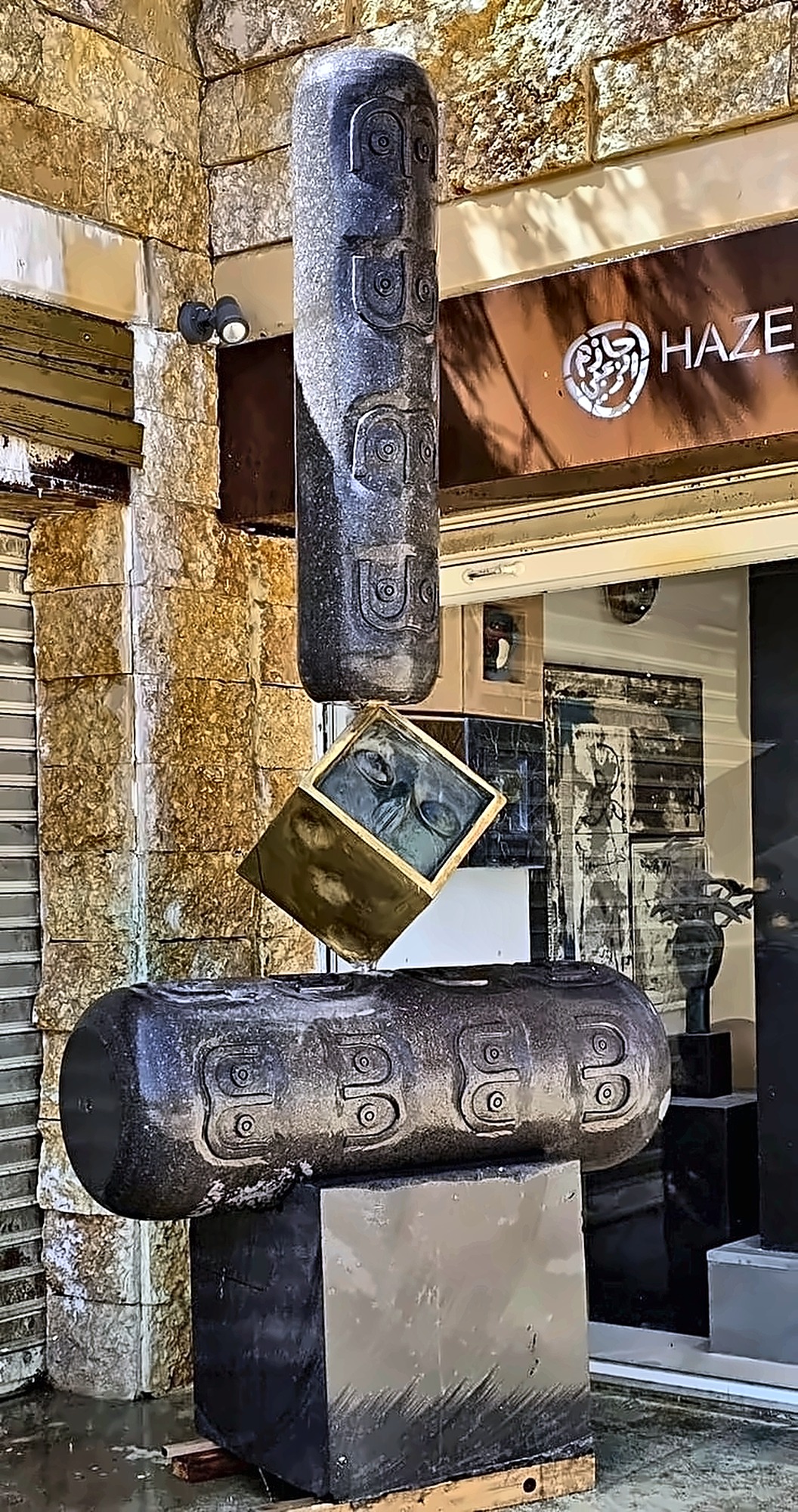
The same work seen from the side, the cube catching light.
From the side. The cube holds nothing and rests on nothing.
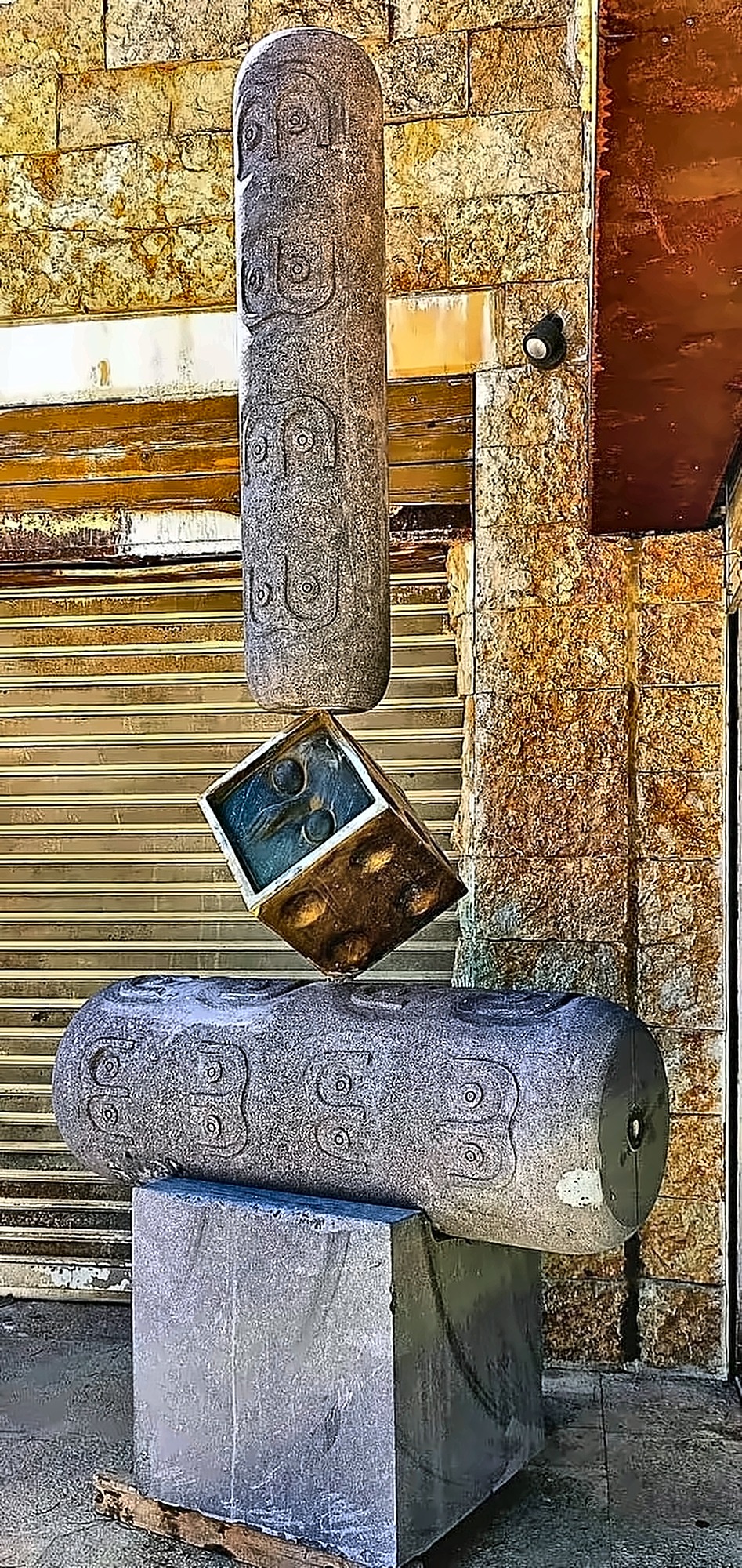
The work dry, the incised eyes clear on both drums.
Dry. The eye is cut into both stones.
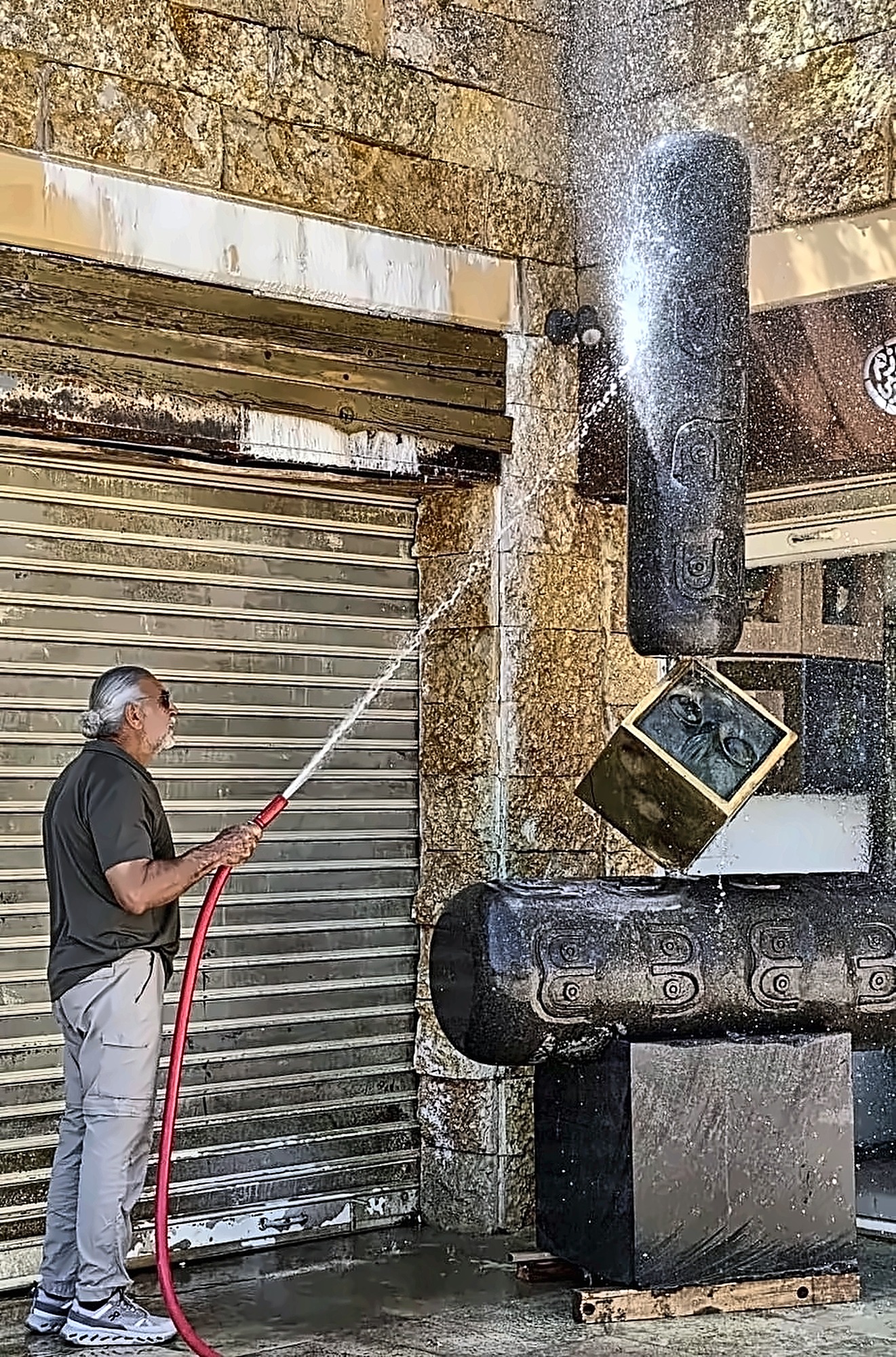
The artist hosing down a tall basalt and bronze sculpture outside his gallery.
He washes it down himself. Amman, August 2026.
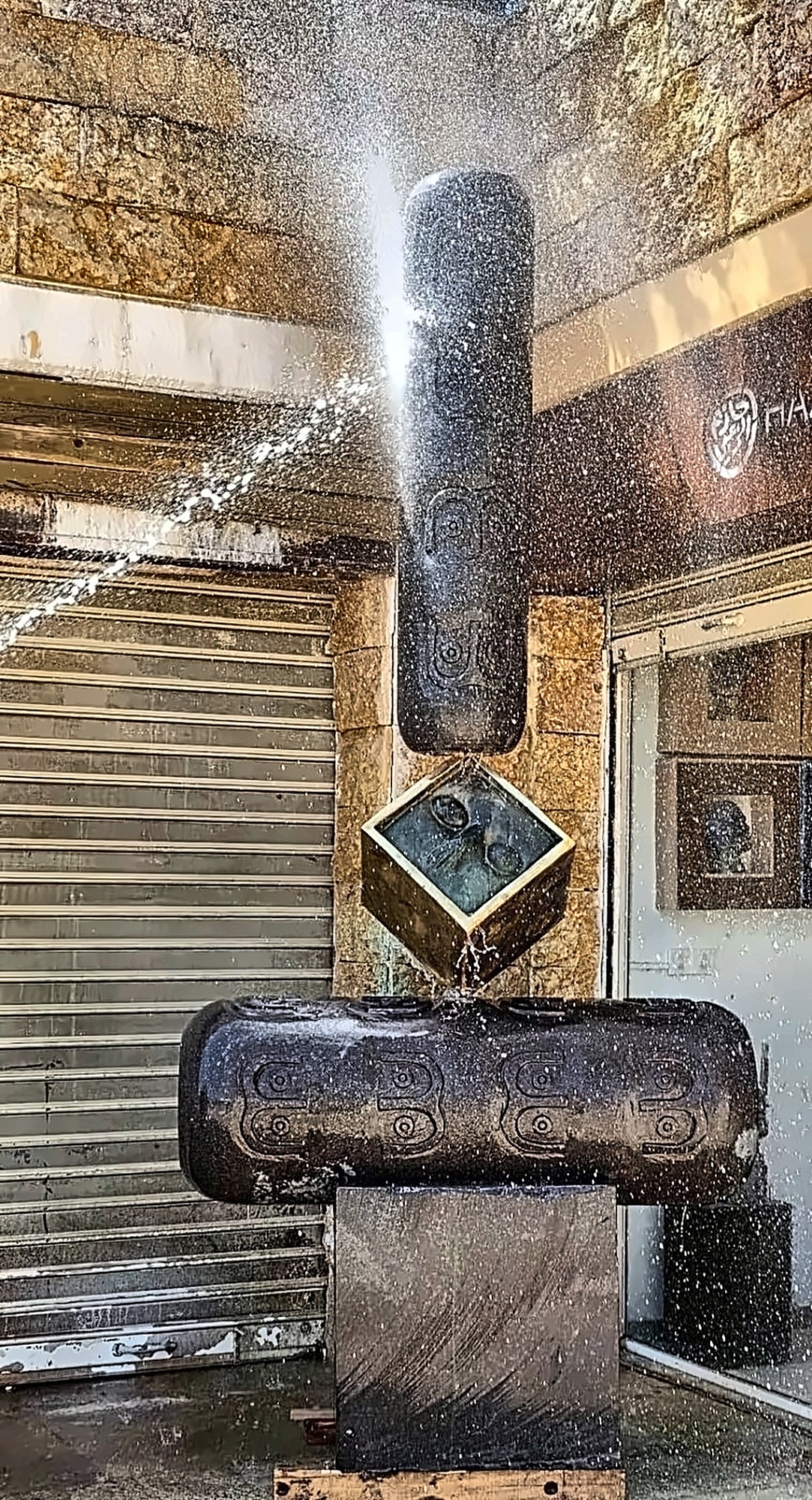
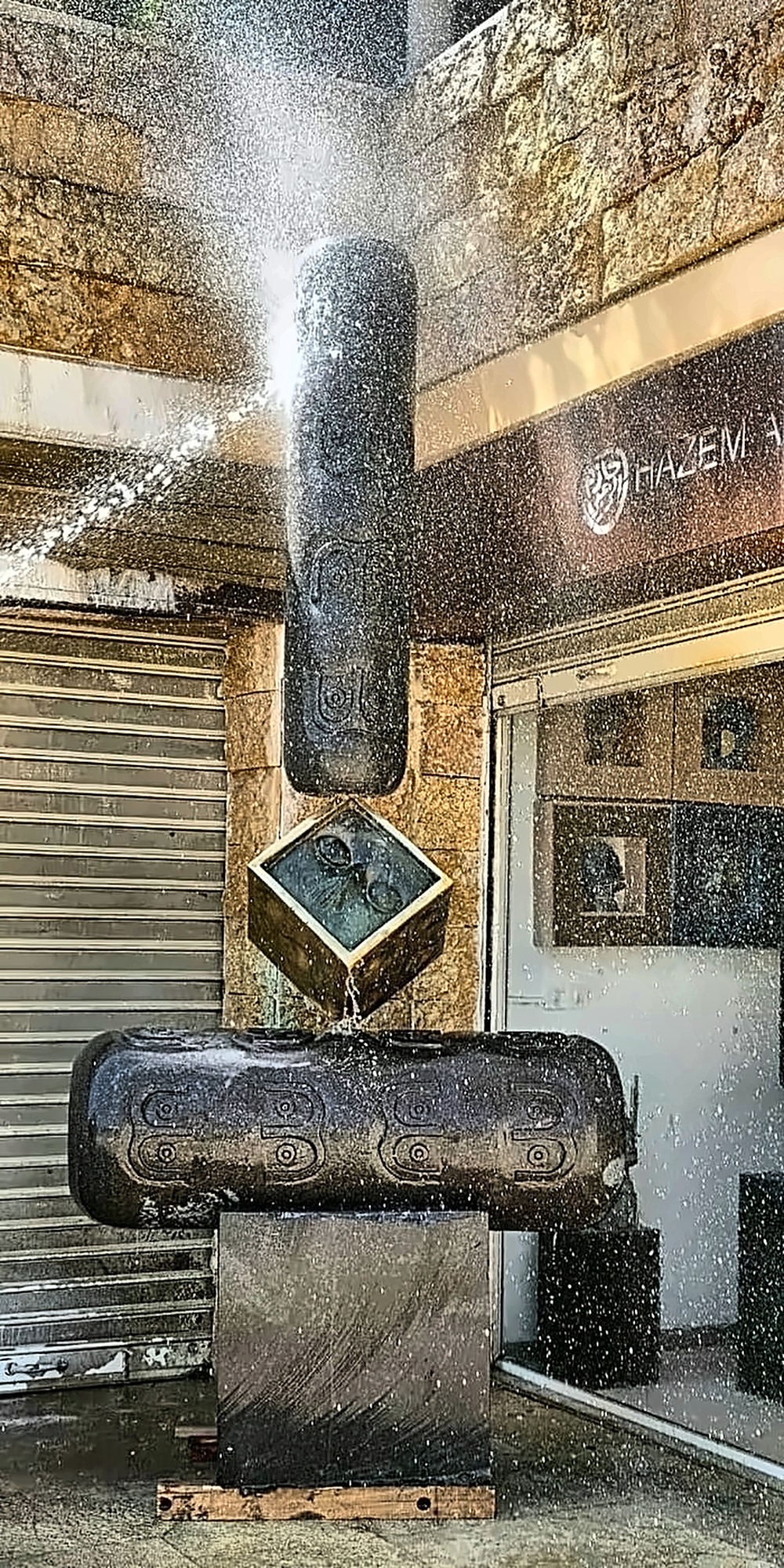
Water falling over the black stone, the surface running wet.
Wet, the basalt goes almost black.
Water breaking over the gilded cube between the two drums.
The water finds the cube first.
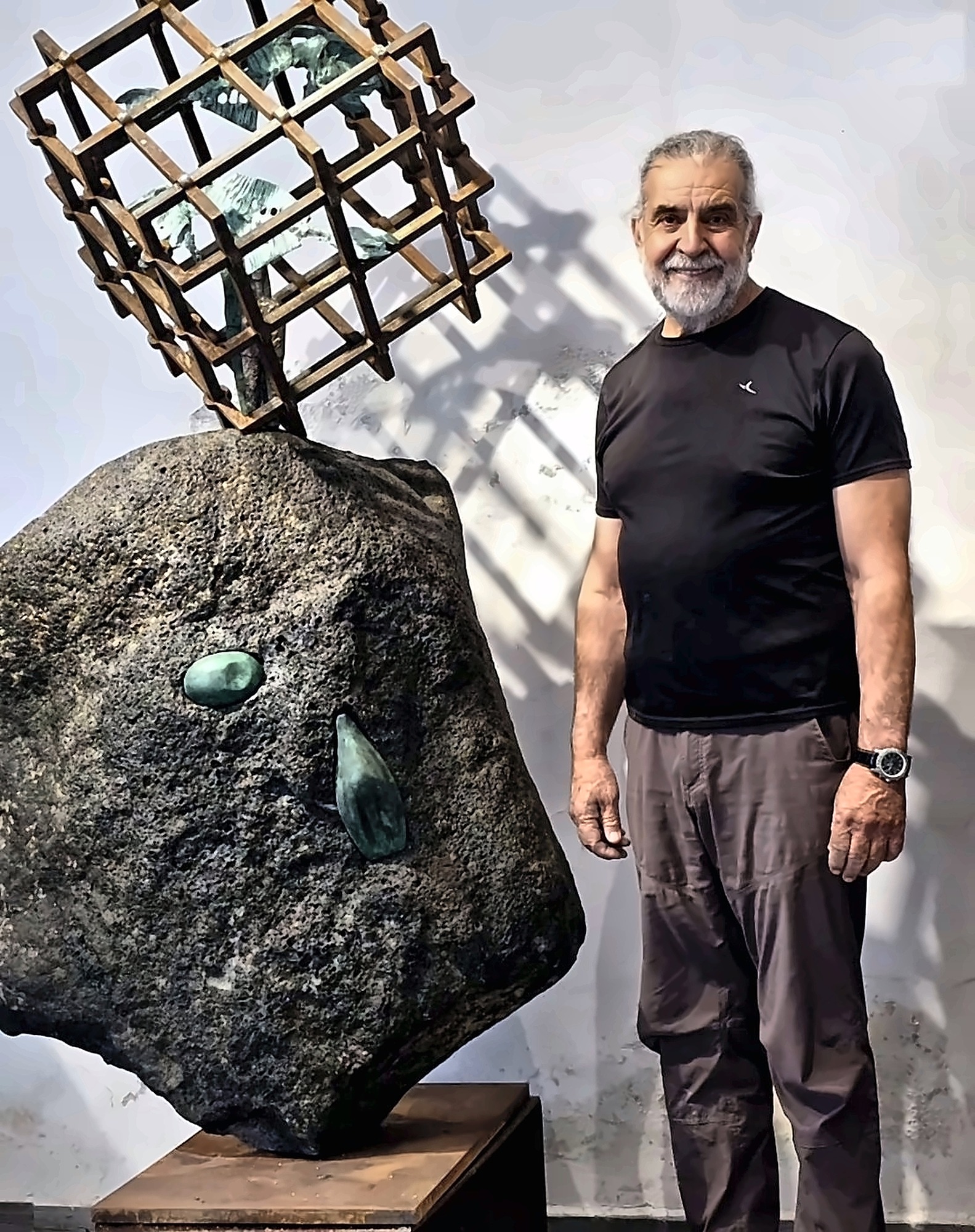
A basalt boulder wrapped in a bronze cage with small birds inside.
Basalt boulder with bronze cage and birds, 2024.
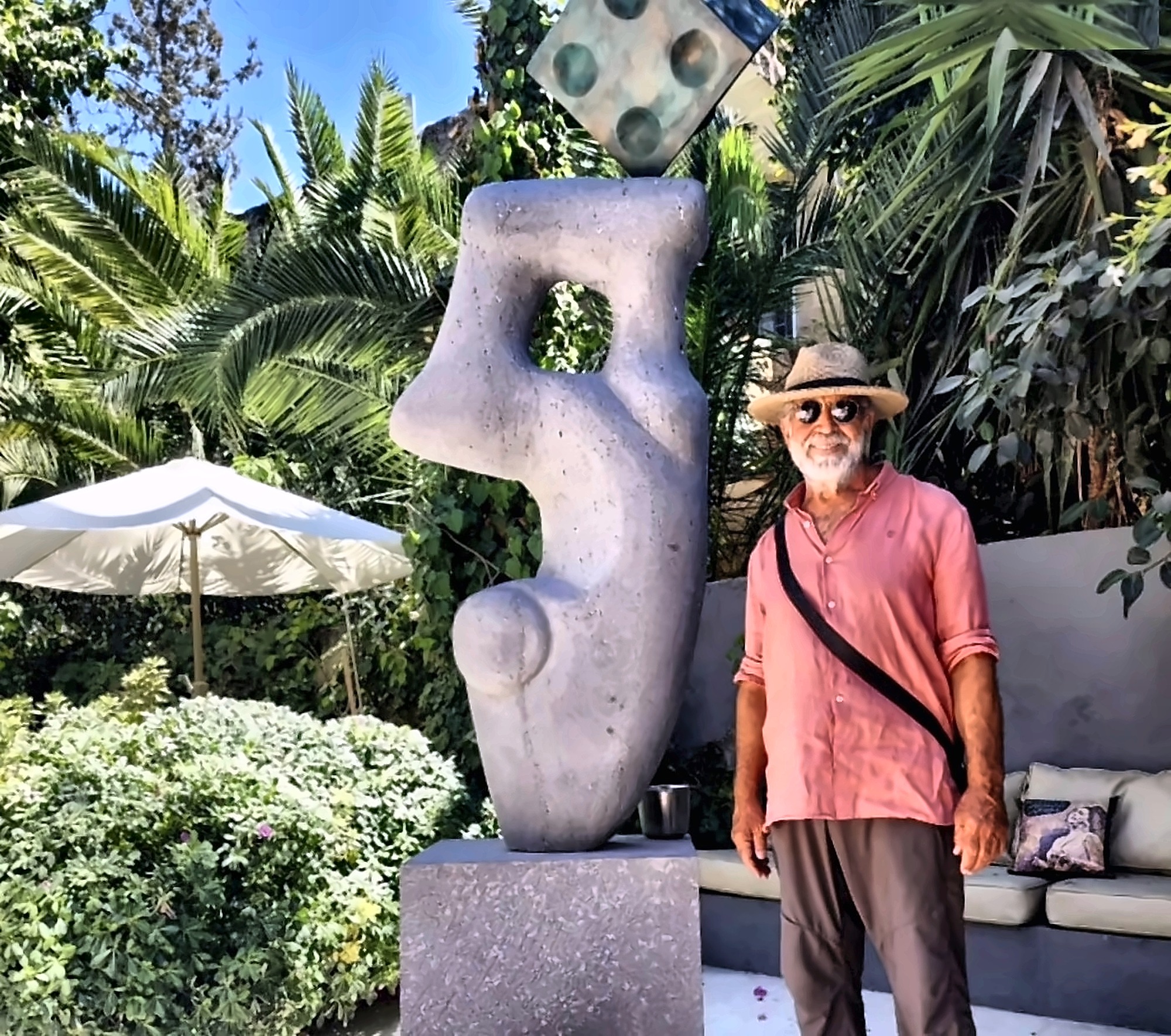
A carved stone with a bronze cube, installed in a garden.
Carved stone with bronze cube, garden installation, 2024.
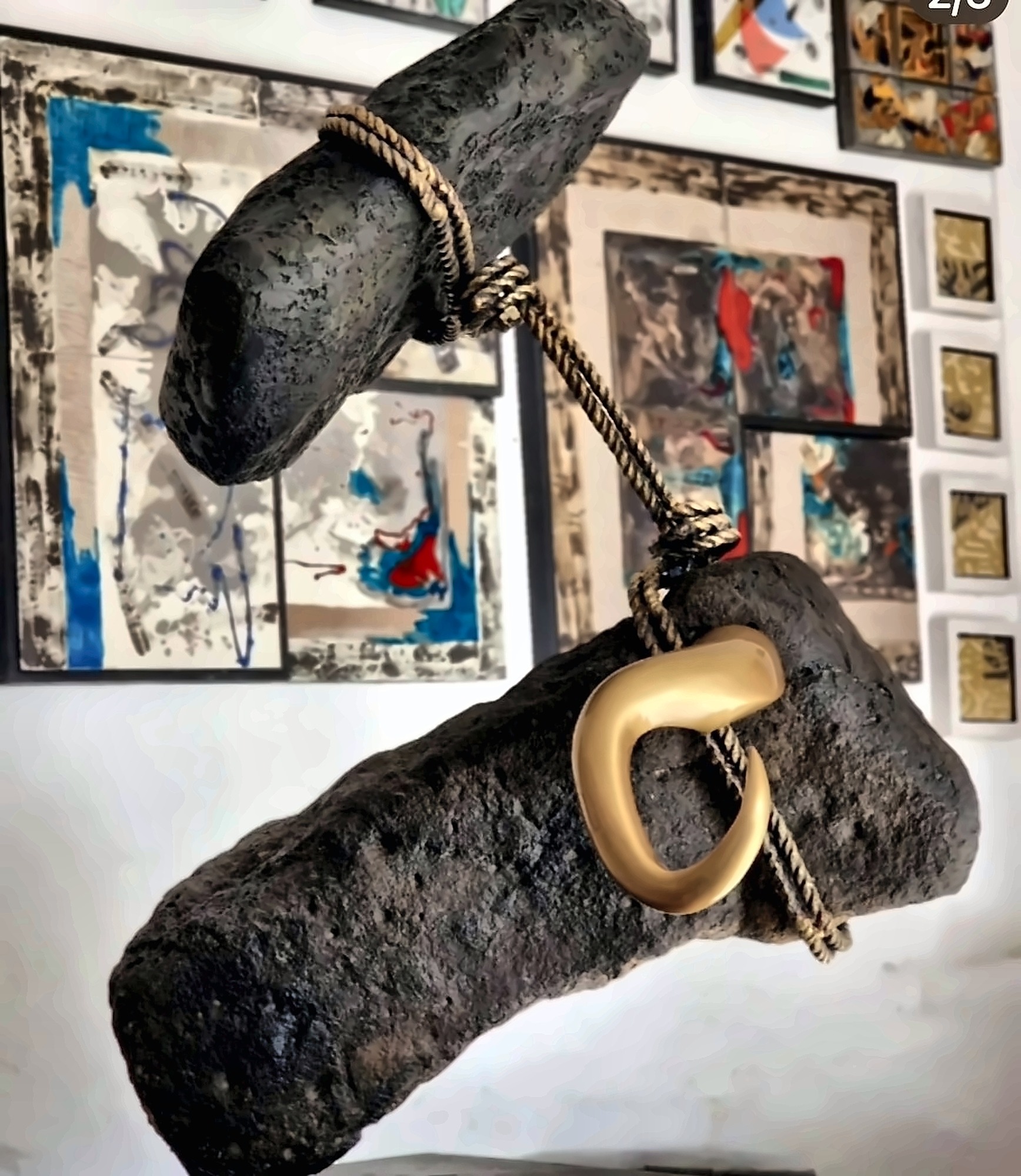
A dark boulder mounted with heavy gilded bronze horns.
Boulder and cast horns. Stone and bronze.
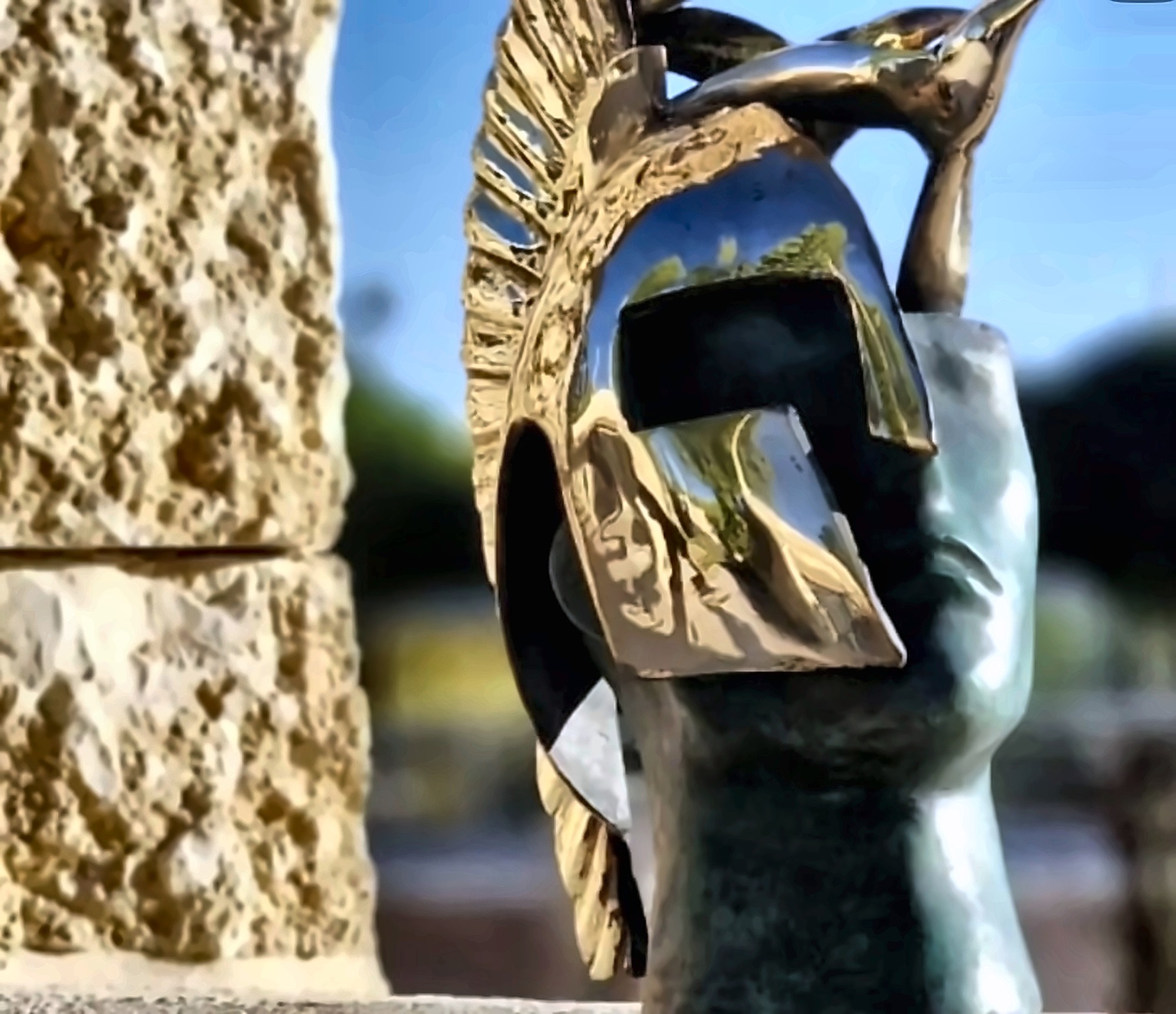
A stone form fitted with a bronze helmet and a bird, against a stone wall.
Stone and bronze, outdoors against limestone.

The stone work is the least photographed part of the practice and the hardest to move. A proper shoot is scheduled; several pieces stand in private gardens and are recorded here only once their owners have agreed.

The record

3 works, measured and sourced.

Recovered from his own published captions, not written here. Dimensions in centimetres as he gave them. Where a year or a title was never published it is absent rather than estimated.

S47
Stone, bronze and iron. 200 × 80 × 110 cm
S48
Stone, bronze and iron. 200 × 80 × 110 cm
003
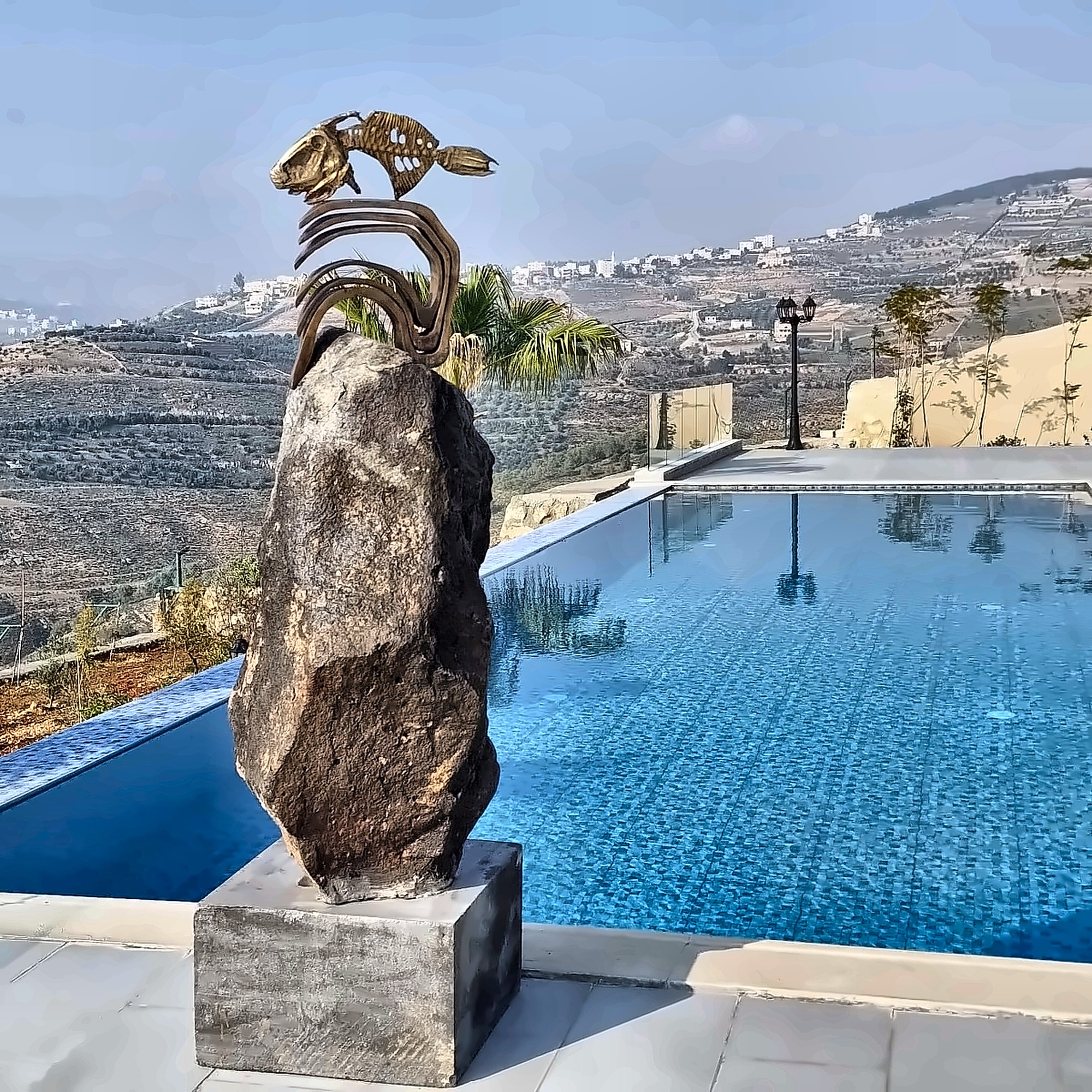
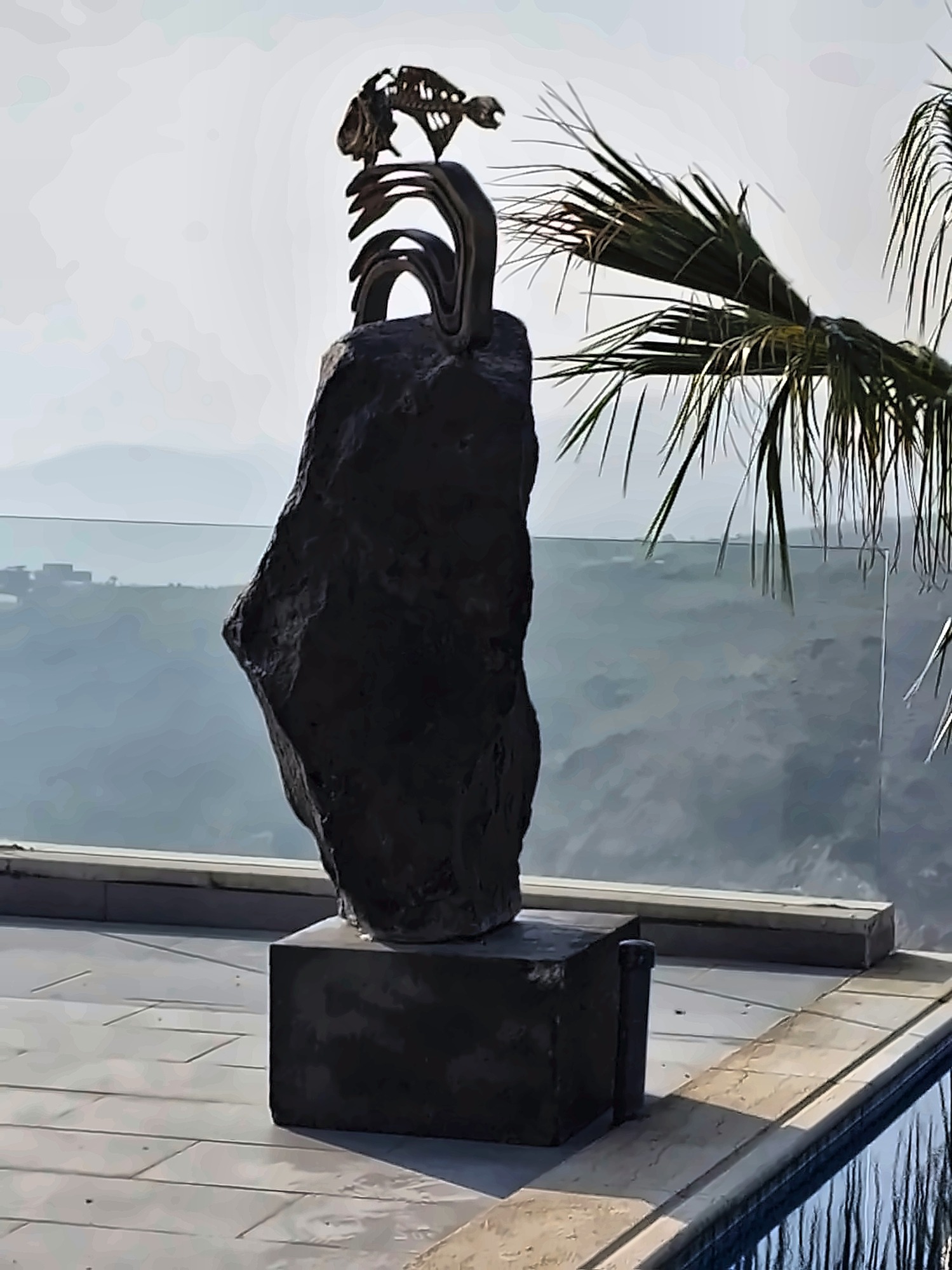
Basalt and gilded bronze · boulder on a black plinth, gilded fish above; standing outdoors beside a pool
Above the valley

A basalt boulder, and a gilded fish riding the wave on top of it.

The stone is left exactly as it was quarried — one broken face, one weathered one. What sits on it is polished to a mirror. It stands on a black plinth at the edge of a pool, with the terraces and olive groves running away underneath.

A rough basalt boulder on a black plinth beside an infinity pool, carrying a gilded bronze fish skeleton and a wave form, with terraced hills beyond.
Basalt and gilded bronze.
The same work at the end of the day, the gilding gone dark against a hazy valley.
The same stone at the end of the day.