
Among the earliest known large-scale representations of the human body.
Ain Ghazal · on the edge of Amman
Nine thousand years.
And a question still open.
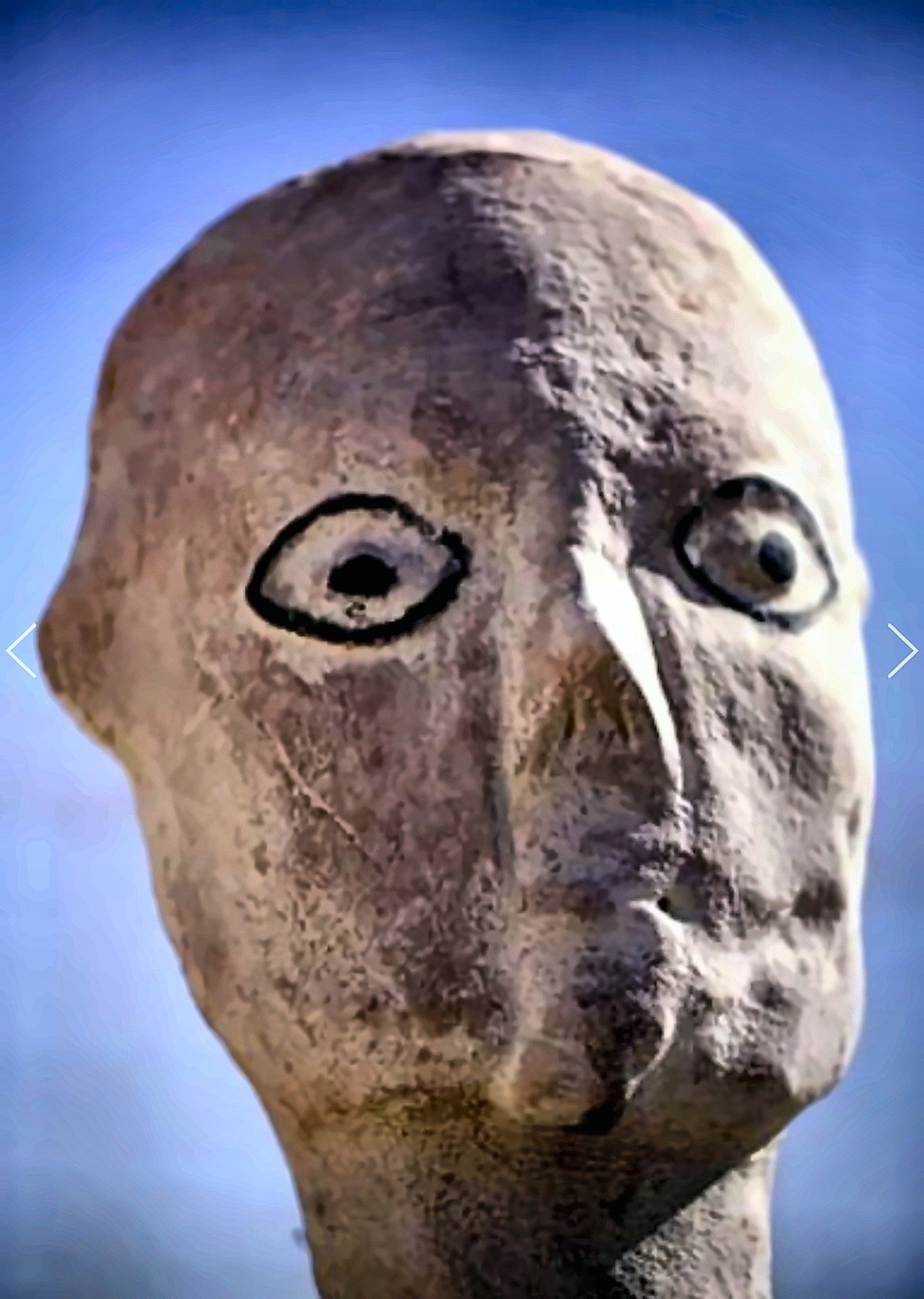
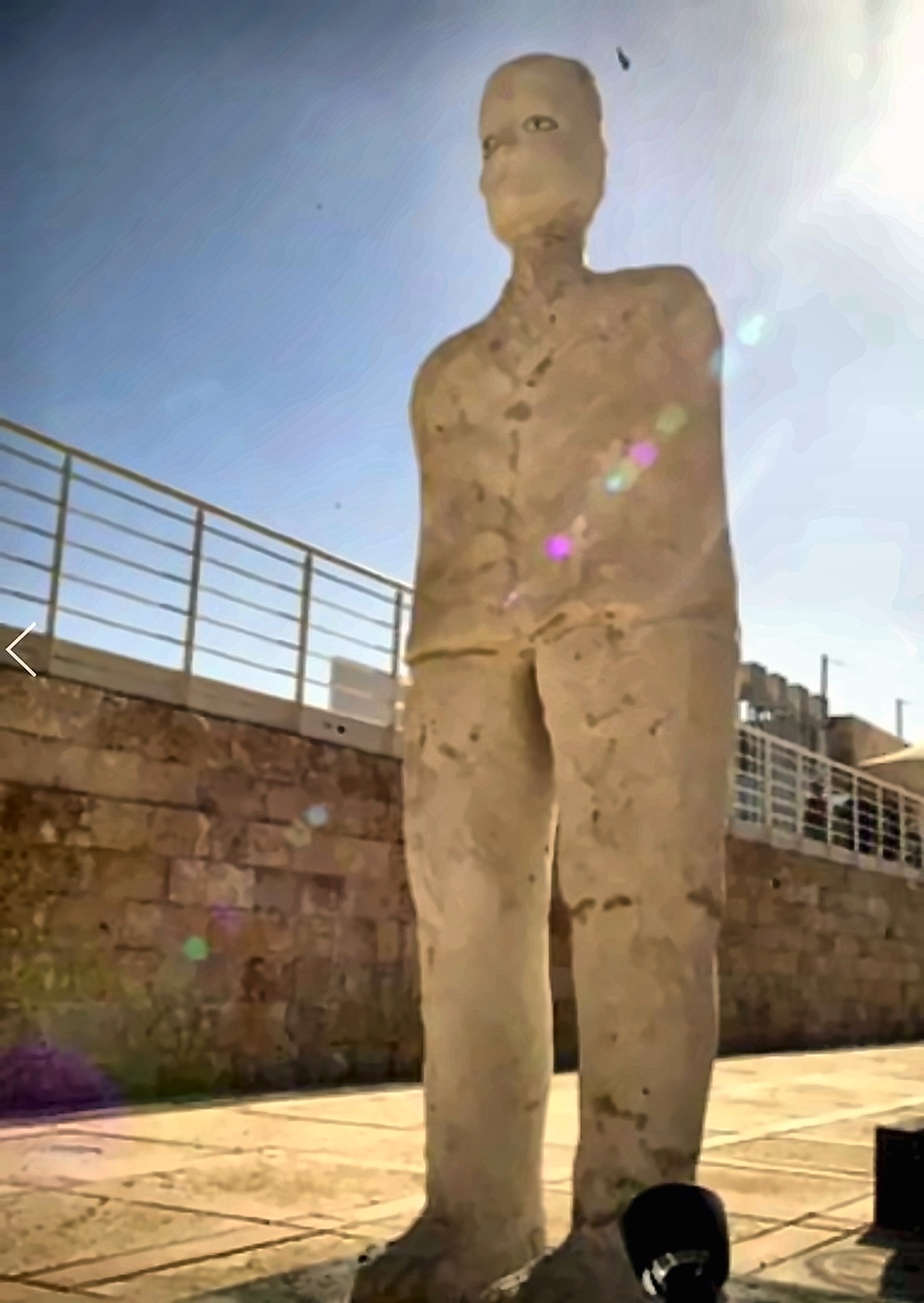
Here, some of the earliest known large-scale human statues were made. The bodies remained. Their makers’ explanation did not. The question outlived them.
ContinueWhy does this matter?
Before Petra.
Before the Nabataeans.
Before the pyramids of Giza.
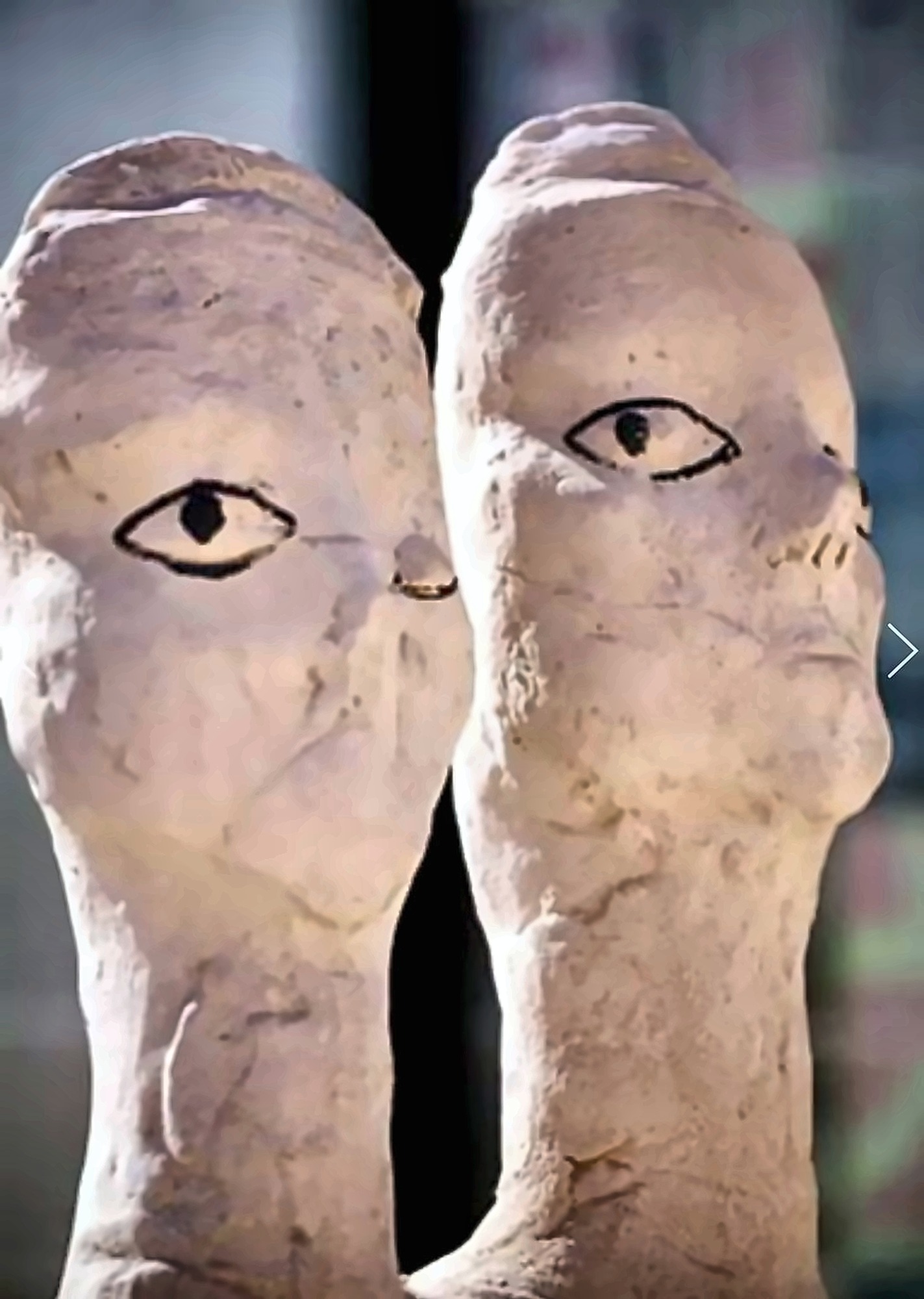
Plaster shaped by hand over bundles of reeds; the eyes were defined with bitumen.
The two-headed figure at Louvre Abu Dhabi stands 88 cm high: a presence, not a small amulet.
Their exact purpose is unresolved. Ritual and social interpretations remain possibilities, not final answers.
Why did Hazem call them important?
“They document the beginnings of human settlement and the release of imagination toward embodiment and invention.”
Nearly nine thousand years later, they did not give us an answer. They left us a question that is still alive.
Hazem Al-Zubi · the answer
He does not borrow the ancient face.
He continues its question.
For Hazem, Ain Ghazal is not a decorative fragment from the past. It is an early moment in which human presence became a large image standing before a community. He returns to face and body not as an artefact to copy, but as a question about memory, silence and time.
Not copying. Answering.
A work that carries the name
Ain Ghazal · عين غزال
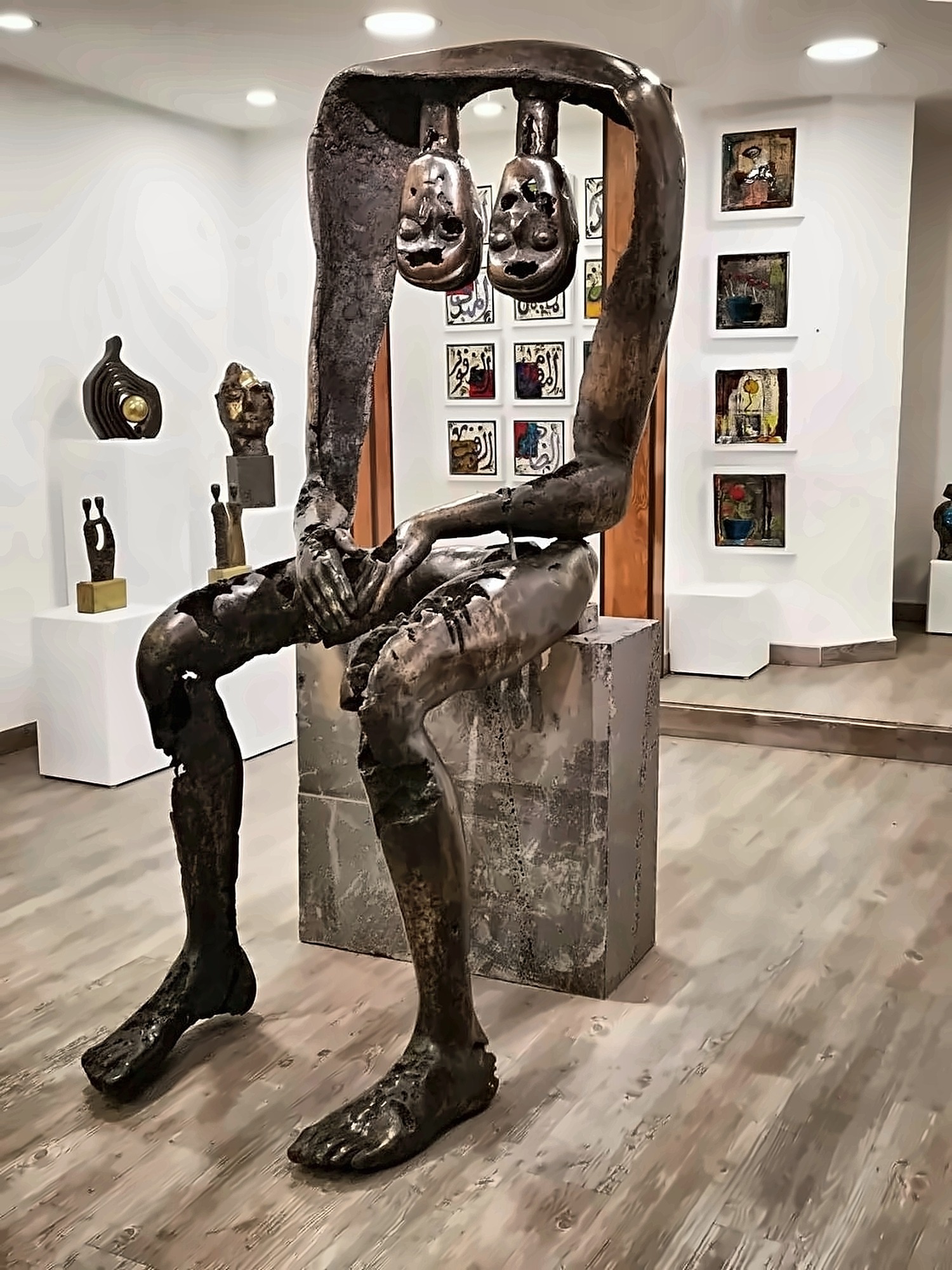
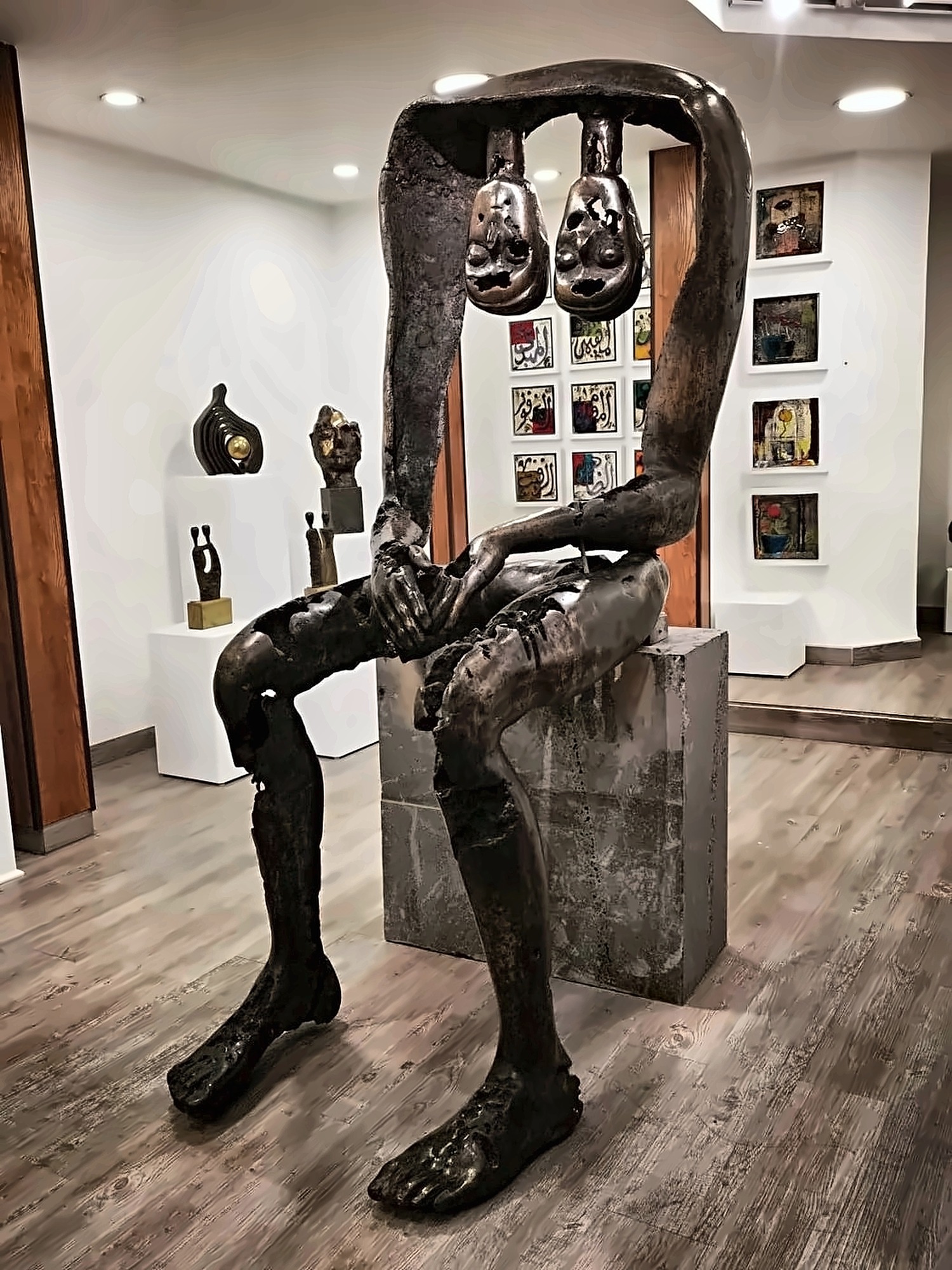
Bronze, 180 × 70 × 70 cm, 2019. A seated figure beneath two suspended heads. Here the site’s name is not decoration; it becomes the explicit address of the work’s conversation.
The relationship is in the record
This is not a reading invented by the website.
From the Hanover project onward, Hazem continued to use and transform Ain Ghazal forms; Al Rai documented this line in a 2010 interview.
Read the source ↗He connected their importance to the beginnings of settlement and to imagination moving toward embodiment and invention.
Read the source ↗Ain Ghazal — bronze, 180 × 70 × 70 cm. The title, material, dimensions and year come from the record supplied by Hazem to the Studio.
An exhibition centred Ain Ghazal and presented new contemporary responses to it, according to Jordanian press coverage.
Read the source ↗